
Drone pre-flight checklist
 By Wayne Bryant, 12,000-hour captain and TC Advanced RPAS pilot · Updated October 2026
How to use this checklistAirline crews never fly from memory, and neither should you. Work through each section in order, every flight. Print it, keep it in your flight bag, and if any item can't be ticked, don't launch until it can.
Get the free PDF versionA 3-page field checklist in the 5.5″ × 8.5″ format, with a fill-in abort criteria table. Made to laminate.Free download
1. Before you leave home
- Category confirmed: Basic, Advanced or other, for this drone and this operation
- Pilot certificate and drone registration on hand; recency current (within 24 months)
- Airspace checked with an approved map tool (NAV CANADA or NRC Drone Site Selection Tool)
- NOTAMs and any temporary restrictions checked; ATC authorization obtained if controlled airspace
- Weather and wind checked against your drone's limits
- Landowner permission arranged if needed; privacy considered
- Batteries charged (aircraft, controller, phone/tablet); spare propellers packed
- Firmware and app up to date (not updated at the field)
2. Site survey on arrival
- Launch and landing area clear, level and away from people
- Obstacles noted: wires, trees, towers, buildings
- People, roads and animals in the area identified; distances from bystanders meet your category
- Sources of interference noted: power lines, metal structures, radio towers
- Emergency landing spots and a lost-link plan chosen
- Visual observer briefed, if used
3. Aircraft checks
- Airframe and arms: no cracks, arms locked
- Propellers: no chips or cracks, correctly fitted and secure
- Battery seated and latched; charge and cell health confirmed
- Gimbal cover removed; camera, lens and sensors clean
- Memory card inserted with space
- Registration marking visible
4. Controller and settings
- Controller and display charged and connected
- GNSS lock acquired; home point recorded
- Return-to-home altitude set above the highest obstacle
- Maximum altitude and distance limits set
- Low-battery and lost-link actions set and understood
- Obstacle sensing and flight mode as intended
5. Final go / no-go
- Risk assessment done (a FRAT score for anything non-routine)
- Abort criteria set: wind, visibility, battery, signal, bystanders, crewed aircraft
- Area clear; announce "clear prop" before arming
- Hover at 2–3 m for 10 seconds: check stability and controls before climbing
When in doubt, don't launch. A cancelled flight costs nothing. A crash can cost your drone, a fine or worse.
Go beyond the checklist
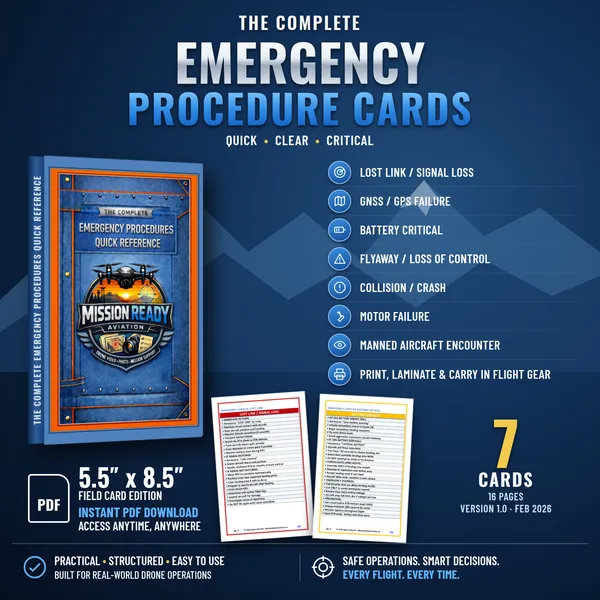 Drone Emergency Procedure CardsSeven quick-action cards: lost link, flyaway, battery, motor failure and more.$32 CAD · Buy now →
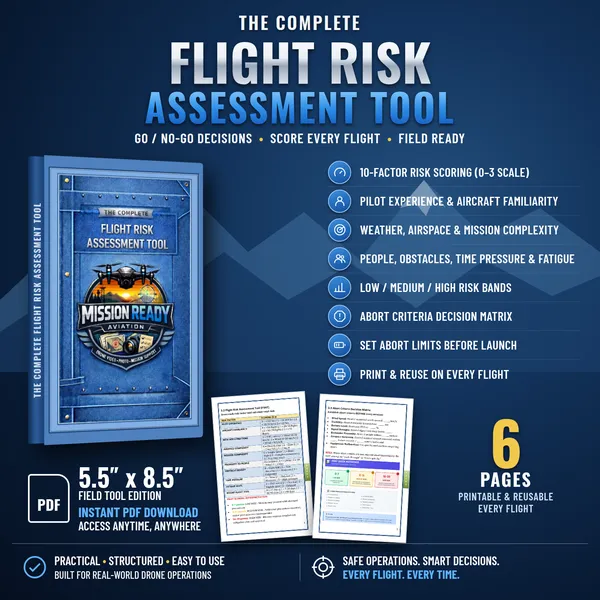 Flight Risk Assessment ToolScore 10 risk factors and make a clear go/no-go call.$15 CAD · Buy now →
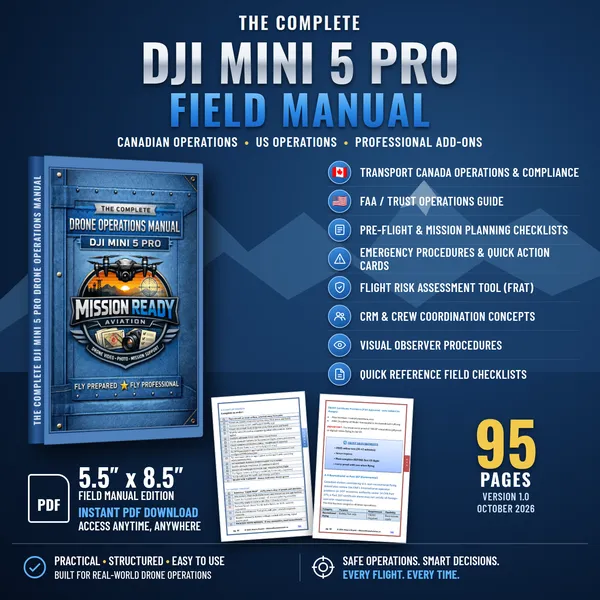 DJI Mini 5 Pro Operations Manual95-page field manual with Canadian and US operations, checklists and emergency cards.$49 CAD · Buy now →
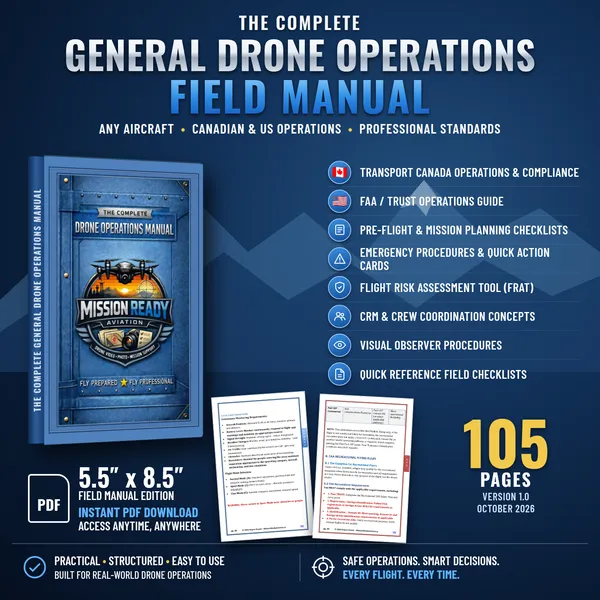 General Drone Operations Field ManualA professional operating system for any drone you fly. 105 pages.$39 CAD · Buy now →
Frequently asked questions
Current as of October 2026. Independent educational information, not legal advice. Mission Ready Aviation is not affiliated with Transport Canada, the FAA or any drone manufacturer. Always confirm the current rules with the official sources before you fly.